Navigating the labyrinth of modern sales and marketing requires more than just good intentions; it demands precision, powerful tools, and a strategy that transcends basic lead generation. For revenue operations teams striving for a truly unified GTM motion, Advanced Apollo.io for Sales & Marketing Operations isn't merely an upgrade—it's the strategic core for optimizing every step of the revenue journey. If you're still treating Apollo as just another prospecting database, you're missing out on its profound potential to automate, personalize, and predict your path to greater profitability.
This isn't about finding a few emails; it's about building an agentic AI-powered ecosystem that learns, adapts, and executes. Think of Apollo.io as your ultimate co-pilot, not just fetching the map, but intelligently rerouting, predicting traffic, and even suggesting scenic detours to your destination: closed deals and happy customers.
At a Glance: What Advanced Apollo.io Unlocks
- Unified Revenue Workflow: Say goodbye to "tool fatigue." Apollo consolidates prospecting, outreach, engagement, and deal execution into one system.
- Agentic AI Power: Moves beyond simple automation to intelligent, autonomous GTM actions, predicting needs and suggesting next steps.
- Hyper-Personalization at Scale: Craft bespoke outreach using dynamic variables, conditional logic, and deep behavioral insights.
- Precision Targeting: Leverage advanced search filters, intent data, and technographics to pinpoint your ideal customer profile (ICP).
- Automated Data Hygiene: Keep your CRM data fresh and accurate with continuous enrichment, ensuring your outreach is always based on the latest information.
- Strategic Integrations: Seamlessly syncs with your existing CRM and tech stack for a single source of truth across your operations.
- Actionable Analytics: Gain deep insights into what’s working, what’s not, and where to optimize for maximum revenue impact.
Beyond the Basics: Why Apollo.io Isn't Just for Prospecting Anymore
For many, Apollo.io starts as a powerful contact database—a place to unearth new leads and verify contact details. And it excels there, offering an expansive resource for accurate and up-to-date prospect information. But to truly master Apollo.io, you need to see it as a comprehensive Go-To-Market (GTM) platform. It's designed to consolidate your entire revenue workflow, solving the pervasive problem of "tool fatigue" and the inefficiency that comes from juggling multiple disparate systems for sales operations.
Imagine the time and money saved when your prospecting, outreach, data enrichment, and deal management all live in one intelligent hub. Apollo.io streamlines the lead generation process and helps businesses supercharge sales strategies, moving you from merely finding contacts to strategically engaging and closing deals within a single interface.
The Agentic AI Shift: From Automation to Autonomy
What truly sets Advanced Apollo.io apart is its pioneering shift toward agentic AI. This isn't just about automating repetitive tasks; it's about creating intelligent agents that can understand context, make decisions, and execute complex workflows without constant manual oversight.
Think of it this way: traditional automation might send an email sequence. Agentic AI, however, might identify a prospect showing high intent, then autonomously enrich their data, cross-reference it with your ICP, tailor a personalized sequence using dynamic content, schedule a LinkedIn follow-up task, and even alert a sales rep at the optimal moment – all based on real-time signals and predefined playbooks. It's a fundamental move beyond complex Boolean searches and manual data entry, providing what Apollo describes as the first fully agentic GTM platform.
Unlocking Deep Insights: Advanced Prospecting & Data Enrichment
The foundation of any successful sales and marketing operation is accurate, timely data. Advanced Apollo.io empowers you to move beyond broad strokes to surgical precision in identifying and understanding your prospects.
Precision Targeting with Hyper-Filtered Searches
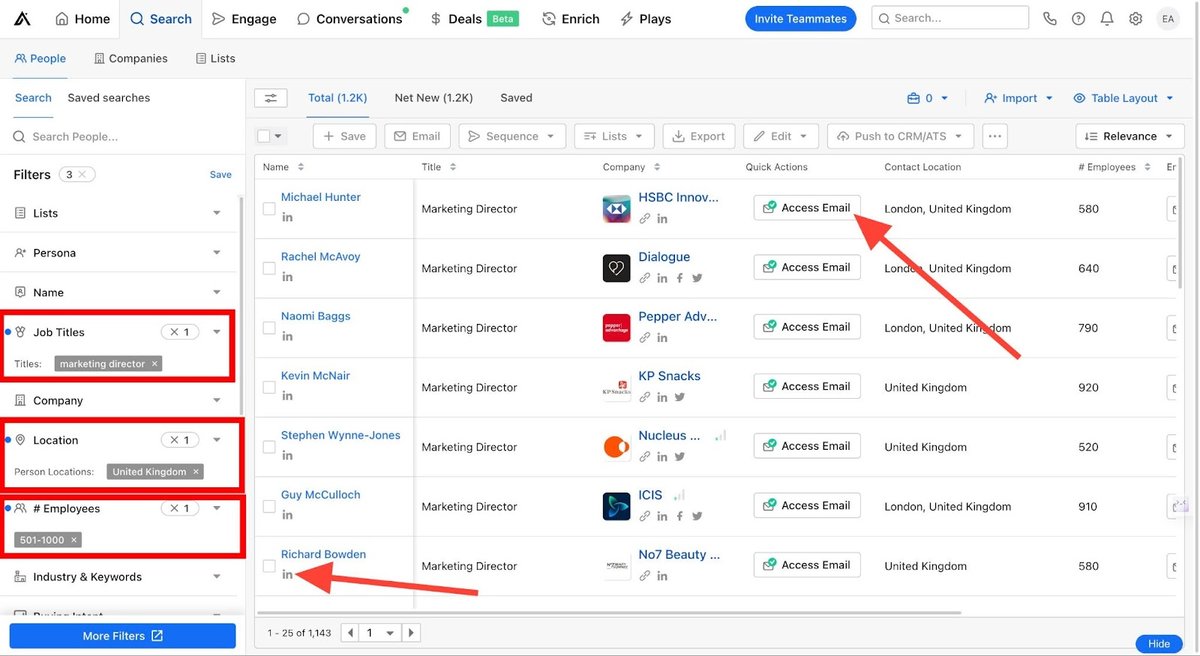
While basic search filters are useful, true mastery lies in leveraging Apollo.io's advanced search and filtering capabilities to segment your market with unparalleled accuracy.
- Boolean Logic on Steroids: Go beyond simple AND/OR. Combine
(Title:"VP Sales" OR Title:"Head of Sales") AND (Industry:"Software" NOT "Gaming")with filters for company size, revenue, funding rounds, and geography. You can layer multiple criteria to create incredibly niche prospect lists. - Technographic Filters: Identify companies using specific technologies (e.g., Salesforce, HubSpot, Intercom). This is invaluable for selling complementary solutions or targeting competitors' customers.
- Job Change & Intent Signals: Target prospects who have recently changed jobs (they're often looking to implement new tools) or companies showing intent signals (e.g., visiting specific pages on your website, engaging with competitor content).
- Custom Fields for Niche Markets: If you have unique criteria for your ICP, Apollo.io allows you to upload custom fields and then filter by them, making your database incredibly flexible.
By mastering these filters, you're not just finding leads; you're pinpointing individuals and companies who are demonstrably a perfect fit for your offering, significantly boosting your conversion rates.
Leveraging Intent Data for Timely Outreach
In the advanced Apollo.io toolkit, intent data is gold. This data tells you who is actively researching solutions like yours and when they're doing it.
Apollo.io integrates with various intent data providers, allowing you to:
- Identify In-Market Buyers: See which companies are searching for keywords related to your product or service.
- Score Prospects: Prioritize leads based on their intent level, ensuring your sales team focuses on those most likely to convert.
- Time Your Outreach: Reach out when prospects are most receptive, making your messages hyper-relevant and timely.
Combining precision targeting with intent data means your sales team isn't just prospecting; they're intercepting active buyers at the moment of highest need.
Keeping Your CRM Gold: Automated Data Enrichment & Hygiene
A stale CRM is a liability. Advanced Apollo.io offers robust features for continuous data enrichment and hygiene, ensuring your records are always fresh.
- Real-time Enrichment: Automatically updates contact and company information (job titles, company size, industry, revenue, technographics) as new data becomes available.
- Data Deduplication & Cleansing: Identifies and merges duplicate records, cleans up inconsistent formatting, and removes invalid data, giving you a cleaner database.
- Custom Field Mapping: Ensure seamless synchronization between Apollo.io and your CRM (e.g., Salesforce, HubSpot) by mapping custom fields, maintaining data integrity across platforms.
This proactive approach to data management means your sales and marketing teams always operate with the most accurate information, leading to more personalized outreach and fewer wasted efforts. It's a critical component for Mastering Apollo lead generation at scale, ensuring every lead is as actionable as possible.
Mastering Multi-Channel Engagement: Sequences & Workflows
Gone are the days when a single email could reliably capture attention. Today's buyers expect personalized, multi-channel engagement. Apollo.io's sequences and workflows are built for this complexity.
Designing Sophisticated Sequences: Beyond Email
Apollo.io sequences aren't just for sending emails. They are comprehensive multi-touch journeys designed to engage prospects across various channels and adapt to their behavior.
- Automated Tasks: Integrate non-email actions like LinkedIn profile views, connection requests, and direct messages, or even manual tasks like personalized video voicemails directly into your sequences. Apollo.io reminds reps when to perform these steps.
- Conditional Logic for Dynamic Paths: This is where sequences become truly advanced. Based on a prospect's actions (e.g., opened email, clicked link, replied, visited pricing page), Apollo.io can automatically move them to a different sequence, fast-track them to a sales rep, or remove them entirely. For example, if a prospect clicks a specific link, they might move to a sequence focused on that product feature, while non-responders get a different follow-up.
- Time Delays & Smart Scheduling: Optimize delivery times based on prospect time zones and your observed best engagement windows, ensuring your messages land when they're most likely to be seen.
Personalization at Scale: Dynamic Fields & Custom Variables
Mass emails feel exactly that: mass. Apollo.io allows for hyper-personalization that doesn't require manual effort for every single prospect.
- Dynamic Custom Fields: Populate emails and messages with prospect-specific data like
{{first_name}},{{company_name}},{{job_title}}, and even{{industry}}or{{pain_point}}if you've enriched your data accordingly. - Fallback Variables: Ensure your personalization never falls flat. If a custom field is empty, a fallback variable can provide a generic alternative (e.g., "Hi {{first_name | 'there'}}" becomes "Hi there" if no first name is available).
- A/B Testing Elements: Don't guess what works; test it. A/B test different subject lines, body copy, calls-to-action, send times, and even specific steps within a sequence to continually optimize performance. This iterative improvement is key to advanced sales operations.
A/B Testing Your Way to Optimal Engagement
True mastery of sequences comes from continuous optimization. Apollo.io's A/B testing capabilities are a game-changer for refining your outreach strategy.
- Test Everything: Experiment with different subject lines, email body copy, calls-to-action (CTAs), send times, and even the order or type of touchpoints within a sequence.
- Segmented Testing: Test different variations on specific segments of your audience to understand nuances in buyer behavior.
- Automated Winners: Some advanced features can even automatically favor the winning variant over time, ensuring your sequences are always performing at their peak.
By systematically testing and refining your sequences, you can significantly boost open rates, click-through rates, and ultimately, conversion rates. It’s an essential practice for anyone focused on Mastering Apollo lead generation through strategic outreach.
The Power of Integration: Syncing Apollo with Your Ecosystem
Apollo.io's true strength in advanced operations lies in its ability to act as the central nervous system for your revenue tech stack. Seamless integration means a single source of truth, reducing manual data entry and ensuring consistency across all platforms.
Seamless CRM Synchronization
Integrating Apollo.io with your CRM (like Salesforce, HubSpot, Microsoft Dynamics 365, or Zoho CRM) is non-negotiable for advanced users.
- Bi-directional Data Flow: Not only does Apollo.io push new leads and activity data (emails sent, opens, clicks, replies) into your CRM, but it can also pull updated contact information back, keeping both systems aligned.
- Custom Field Mapping: Map Apollo.io fields to your CRM's custom fields, ensuring that specialized data relevant to your business is captured and transferred accurately.
- Automated Record Creation: Automatically create new contact, account, and opportunity records in your CRM based on triggers in Apollo.io (e.g., a prospect replies to an email, or a meeting is booked). This reduces manual effort and speeds up the sales cycle.
- Exclusion Lists: Prevent Apollo.io from contacting existing customers or specific accounts by syncing exclusion lists from your CRM, avoiding embarrassing missteps.
This level of integration ensures that your sales reps have a holistic view of every prospect and customer, regardless of which system they're primarily working in.
Integrating with Sales Engagement Tools (if necessary)
While Apollo.io offers robust email and task sequencing, you might have specific use cases for other specialized sales engagement tools. Apollo.io's API and webhooks allow for sophisticated integrations with:
- Calendar Tools: Automatically schedule meetings and update your calendar with booked appointments.
- Communication Platforms: Push lead details to Slack or Microsoft Teams for real-time alerts when high-intent prospects engage.
- Dialers & Call Tracking: Log call activities and outcomes directly back into Apollo.io and your CRM.
The goal is to ensure data flows freely and intelligently, removing silos and allowing your teams to work more efficiently.
Bi-directional Data Flow for a Single Source of Truth
The concept of a "single source of truth" is paramount in advanced revenue operations. With robust bi-directional sync, Apollo.io contributes to this by:
- Preventing Data Duplication: Reduces the likelihood of multiple, conflicting records for the same contact or company.
- Ensuring Data Consistency: All teams operate from the same, most up-to-date information, eliminating confusion and errors.
- Enhancing Reporting Accuracy: Data-driven decisions are only as good as the data itself. A clean, unified dataset provides accurate insights.
This seamless data flow underpins every advanced strategy, from account-based marketing (ABM) to hyper-personalized outreach.
Optimizing Performance: Analytics, Reporting & AI Insights
Advanced Apollo.io isn't just about execution; it's about intelligent iteration. Its powerful analytics and reporting features turn raw data into actionable insights, allowing you to continually refine your GTM strategy.
Deep Dive into Apollo.io's Reporting Suite
Apollo.io provides a comprehensive dashboard that goes far beyond basic open and reply rates.
- Sequence Performance: Analyze individual sequence effectiveness, identifying which messages, channels, and steps drive the most engagement. Track metrics like deliverability, open rates, click-through rates, reply rates, and meeting booked rates.
- Team Performance: Monitor individual rep and team performance, identifying top performers and areas where coaching might be needed. Understand conversion rates at each stage of the funnel.
- A/B Test Results: Clearly see which variations (subject lines, CTAs, message bodies) are outperforming others, allowing you to quickly implement winning strategies.
- Revenue Attribution: Track which sequences and outreach efforts ultimately lead to won deals, providing critical insights into ROI for your GTM activities.
These granular reports help you understand not just what happened, but why, empowering you to make data-driven decisions.
Identifying Bottlenecks & Opportunities
With Apollo.io's robust analytics, you can quickly spot inefficiencies and uncover hidden opportunities.
- Funnel Analysis: Pinpoint where prospects drop off in your sequences or sales process. Is your initial email struggling? Are follow-up calls being missed?
- Targeting Effectiveness: Analyze which prospect segments (by industry, title, company size) respond best to specific outreach strategies. This helps refine your ICP.
- Content Optimization: See which types of content (e.g., blog posts, case studies, whitepapers linked in emails) resonate most with your audience.
- Sales Cycle Velocity: Understand how quickly prospects move through different stages, and identify factors that accelerate or hinder progress.
Predictive Analytics & AI-Driven Recommendations
This is where the agentic AI truly shines. Apollo.io uses its vast dataset and machine learning to offer predictive insights and recommendations.
- Lead Scoring: Automatically score leads based on their fit (how closely they match your ICP) and engagement (their interactions with your outreach), prioritizing those most likely to convert.
- Optimal Send Times: AI analyzes past performance to recommend the best times to send emails or make calls for specific prospect segments, increasing engagement.
- Content Suggestions: Based on prospect profiles and historical success, Apollo.io can suggest which content pieces or value propositions are most likely to resonate.
- Next Best Action: For sales reps, Apollo.io can suggest the "next best action" for a prospect, whether it's an email, a LinkedIn message, or a call, based on their recent behavior and the overall strategy.
These AI-driven insights elevate your operations from reactive to proactive, ensuring you're always making the smartest moves. Understanding these nuances is crucial for Mastering Apollo lead generation in an intelligent, scalable way.
Building an Agentic GTM Strategy with Apollo.io
The promise of agentic AI is to transform manual, reactive Go-To-Market efforts into an autonomous, intelligent system. Apollo.io is at the forefront of this revolution.
From Manual to Autonomous: The Vision of Agentic AI
Traditional automation requires you to define every single step. Agentic AI, however, takes cues from its environment and adapts. For example:
- Dynamic Prospecting: Instead of building static lists, Apollo's agentic AI can continuously monitor for new leads that fit your evolving ICP and automatically add them to relevant sequences.
- Self-Optimizing Sequences: The system learns from every interaction, automatically tweaking elements of your outreach (e.g., subject lines, call scripts, follow-up timing) to improve performance without manual intervention.
- Intelligent Lead Handoff: When a lead shows high intent, the AI doesn't just notify a rep; it can intelligently qualify the lead, enrich their profile, and prepare a personalized briefing for the rep, facilitating a smooth, high-impact handoff.
This shift empowers your teams to focus on strategy and high-value interactions, letting the AI handle the operational complexity.
Practical Steps to Implement Agentic Workflows
Implementing agentic workflows requires a strategic mindset shift.
- Define Clear Playbooks: Even with AI, clear objectives and a framework for desired outcomes are crucial. What constitutes a "qualified" lead? What's the ideal customer journey?
- Start Small, Iterate Fast: Don't try to automate your entire GTM overnight. Start with one sequence or one specific segment, implement agentic elements, and closely monitor performance.
- Feed the AI with Good Data: The intelligence of agentic AI is directly proportional to the quality and quantity of data it receives. Ensure your CRM is clean and your Apollo.io data is accurate. This is fundamental to Mastering Apollo lead generation through smart automation.
- Continuous Learning & Feedback: Treat your AI as a team member. Provide feedback, adjust parameters, and allow it to learn from successes and failures.
Overcoming Common Challenges in Advanced Adoption
While powerful, adopting advanced Apollo.io features isn't without its hurdles.
- Complexity Overload: The sheer number of features can be overwhelming. Focus on what directly impacts your key metrics first.
- Data Silos & Integration Issues: Ensure your integration with CRM and other tools is robust and well-maintained. Data discrepancies can derail agentic workflows.
- Fear of Losing the "Human Touch": Agentic AI enhances human connection by handling the mundane, freeing up reps for truly personalized, high-value interactions, not replacing them.
- Lack of Training & Buy-in: Invest in comprehensive training for your sales and marketing teams. Show them the "why" behind these advanced features and how they benefit individual performance.
Advanced Use Cases: Real-World Scenarios
Let's look at how advanced Apollo.io plays out in practical scenarios, helping teams achieve specific revenue goals.
Targeting ICP with Surgical Precision
A B2B SaaS company specializing in HR tech wants to target companies with 200-1000 employees in the healthcare sector, specifically those not currently using a major competitor like Workday, but are using a specific ATS.
Advanced Apollo.io Action:
- Advanced Search: Use filters for "Industry: Healthcare," "Employee Count: 200-1000," "Technographics: (ATS Name) – NOT Workday."
- Intent Data: Layer on intent data to identify companies actively searching for "HR software solutions" or "employee engagement platforms."
- Custom Fields: Upload a list of "negative accounts" (existing customers or companies not to contact) from their CRM and use them as an exclusion filter.
- Personalized Sequence: Create a sequence with dynamic fields to mention their specific ATS, pain points common in healthcare HR, and a relevant case study.
- Agentic Follow-up: If a prospect opens an email with a case study link, the sequence automatically branches them to a specific nurture path focusing on similar success stories.
Re-engaging Stalled Opportunities
A sales team has a pipeline of opportunities that have gone cold for 60+ days. They want to re-engage them intelligently.
Advanced Apollo.io Action:
- CRM Integration: Pull a list of "stalled opportunities" (e.g., "Deal Stage: Negotiation," "Last Activity: >60 days") from the CRM into Apollo.io.
- Data Enrichment: Run these contacts through Apollo.io to update job titles, company info, and check for any recent news or funding rounds.
- Hyper-Personalized Sequence: Craft a specific re-engagement sequence that acknowledges the "gap," offers new value (e.g., a relevant new product feature, an industry report, an invite to a webinar), and includes a different call to action than the initial outreach. Use dynamic fields to reference their previous interest.
- Multi-Channel Approach: Include an automated LinkedIn touchpoint where the rep views their profile and sends a personalized message.
- AI-Driven Nudge: If a prospect opens emails but doesn't reply, Apollo.io can alert the rep to make a direct call, providing context from previous interactions.
Hyper-Personalized ABM Campaigns
A marketing team is running an Account-Based Marketing (ABM) campaign targeting 20 specific high-value accounts.
Advanced Apollo.io Action:
- Account Upload: Upload the list of 20 target accounts directly into Apollo.io.
- Contact Discovery: Use Apollo.io to identify multiple decision-makers and influencers within each target account (e.g., VPs of different departments, C-suite executives).
- Tailored Sequences per Persona: Create unique sequences for each persona within the account (e.g., one for CIOs focused on ROI, another for HR Directors focused on employee experience). Each sequence leverages highly specific messaging and content.
- Cross-Channel Orchestration: Coordinate efforts across email, LinkedIn, and even retargeting ads (if integrated) to ensure a consistent message across all touchpoints.
- Agentic Alerts: Set up alerts for sales reps when any contact from a target account shows high engagement or intent, triggering immediate, personalized follow-up.
- Reporting: Track engagement metrics at the account level, not just individual contact level, to understand overall account penetration and influence.
Common Advanced Apollo.io Questions, Answered
Here are some common questions revenue operations professionals have when considering or implementing advanced Apollo.io strategies.
How does Apollo's agentic AI differ from traditional automation?
Traditional automation follows predefined rules rigorously. If X happens, do Y. Agentic AI, however, is designed to be more autonomous and context-aware. It can interpret signals, make intelligent decisions, and adapt workflows dynamically based on real-time data and learning, often suggesting or executing the "next best action" without explicit step-by-step programming. It's about intelligence and adaptability, not just execution.
What are the key metrics to track in advanced Apollo.io usage?
Beyond basic open and reply rates, advanced users should focus on:
- Meeting Booked Rate: Directly reflects conversion to the next stage.
- Opportunity Creation Rate: How many engaged leads become qualified opportunities.
- Revenue Attribution: Which sequences or campaigns directly influenced closed-won deals.
- Data Accuracy Score: Monitor the freshness and completeness of your prospect data.
- Time-to-Engage: How quickly you can identify an in-market buyer and initiate a personalized conversation.
- Cost Per Qualified Lead (CPQL): Understand the efficiency of your lead generation efforts.
Can Apollo.io truly replace multiple sales tools?
For many core GTM functions—prospecting, email sequences, task management, basic CRM, data enrichment, and analytics—Apollo.io offers a comprehensive solution that can significantly reduce reliance on multiple disparate tools. Its agentic AI is designed to unify these functions. While highly specialized tools for niche needs (e.g., very advanced video prospecting or hyper-specific data visualization) might still be used, Apollo.io serves as a powerful consolidator for the majority of sales and marketing operations.
What's the best way to ensure data quality within Apollo.io?
- Continuous Enrichment: Leverage Apollo.io's automated data enrichment features.
- Regular Audits: Periodically review your data for accuracy and completeness.
- Integration Health: Ensure seamless, bi-directional sync with your CRM to prevent data discrepancies.
- User Training: Train your team on best practices for data entry and usage.
- Exclusion Lists: Proactively manage lists of contacts or companies not to be contacted to avoid outreach to existing customers or unqualified leads.
Your Next Steps: Evolving Your Revenue Operations with Apollo.io
Mastering Advanced Apollo.io for Sales & Marketing Operations isn't a one-time setup; it's an ongoing evolution. You're not just implementing a tool; you're cultivating a more intelligent, agile, and effective revenue engine. The goal is to move from reactive selling to proactive, data-driven engagement, where your teams are empowered to focus on building relationships and closing deals, while Apollo.io handles the intricate orchestration of your GTM strategy.
Start by auditing your current Apollo.io usage. Are you leveraging its full suite of advanced search, intent data, and agentic sequence capabilities? Are your CRM integrations truly optimized for bi-directional data flow? Identify one or two key areas where you can implement more advanced features and rigorously measure the impact. Invest in continuous learning for your team, encouraging them to experiment with A/B testing and leverage AI insights. By embracing Apollo.io's full potential, you're not just improving efficiency; you're fundamentally optimizing your revenue strategy for sustainable growth.